Saturday, May 6, 2017

34+ Link-Building Tips, Tools, and Examples for SEO and Website Traffic

link-building-tips-tools-examples-seo-website-traffic

If you care about content marketing and SEO, you can’t ignore link building.

Google executives acknowledge that backlinks are among top three ranking factors along with content and RankBrain (Google’s artificial intelligence technology that handles search queries).

Backlinks are among top 3 ranking factors along with content and RankBrain, says @mikeonlinecoach. #SEO Click To Tweet

When you get more links, your search engine rankings can improve and website traffic will increase to help you with branding, leads, and sales.

However, it also involves considerable time, patience, and potential disappointments. Like any marketing, it’s trial and error.

For instance, let’s say you create an infographic or video, and ask people to link to it. Even if the content is exceptional, you may be rejected or ignored.

To help, use some of these 34-plus link building tips, tools, and examples to help your business reach the right audiences:

1.Know your talent

Decide early on who is going to do the work. Do you have the expertise? Who can support you internally? Do you need to hire an outside resource? A blend may be best.

2. Prioritize effectively

Link-building strategies often involve concurrent tactics and tasks. Weigh your options and my suggestions. Determine what’s worth your time. Every tactic may not be for you.

3. Track your keyword rankings

Create a baseline of some strategic keywords so you can chart how they improve in light of your link-building efforts. Be sure to add to the list based on new content you promote. You can’t begin to track everything so monitor the most relevant keyword phrases.

4. Use link-building tools

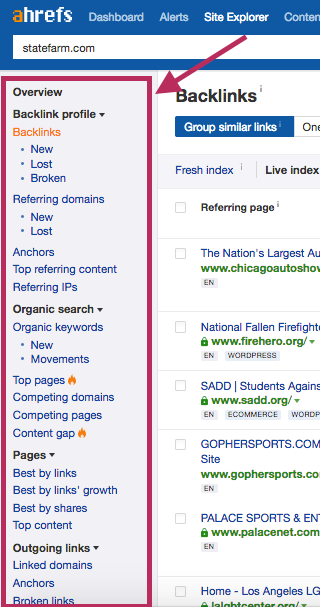
The following link-building tools help you find, sort, and manage potential link sources, including influencer and competitor research. For each link, learn about authority and trust scores that are influenced by the type, quality, and number of backlinks. You may even discover that you’re failing to link well among the websites that your company owns. Here are some tools to consider:

  • Ahrefs – here is an example of a report (other tools also offer many data options and types of reports)
ahrefs

5. Research competitors

I call them “me-too” links. You can find directories, blogs, newsletters, media, and other websites that may be open to linking to your website. Clearly, many will be based on relationships those media have cultivated. But you can usually find some gems and reach out to the same publishers.

6. Clean up your inbound links

One of the worst things about online marketing is that you can be penalized even when you’re not at fault. Unfortunately, some disreputable, spammy, irrelevant, waste-of-digital-space websites may link to you even if you don’t want the link.

You get the “honor” of tapping into your limited time to deal with them. And you can use disavow tools with Google Search Console and Bing Webmaster tools – and hope for the best. Basically, you let search engines know which websites you despise. Along the way, you’re expected to beg the websites to stop linking to you (if they will listen). You simply trust that Google will agree that they’re awful links and you didn’t request them.

You can also minimize or avoid the Google Penguin penalty for spammy backlinks by avoiding as many as possible in the first place. Use the tools to size up link prospects, including authority scores.

Minimize Google penalty for spammy backlinks by avoiding them in the first place, says @mikeonelinecoach. Click To Tweet

7. Buy websites and domains (but be careful)

If you find the right website (with content) or domain name that used to be tied to content, you can inherit backlinks. But you’ll need to size up those backlinks before pointing the websites and/or domain names to yours. Assess the actual links to ensure that they seem to be legitimate (look at the authority scores, number of links, etc.)

8. Create a study

Survey managers and top executives for their opinions on best practices, trends, and industry forecasts. Create a landing page with an executive summary. You’ll feel some pressure to add a response form so you can get key data from prospects. Resist it. Why not just make the results available? Leverage the free resource for awareness and link building.

Go with that executive summary. Beginning with the initial landing page, divide the study into multiple pages on your website so you can get some added SEO value. Reference the full PDF on every page. Block search engines from indexing the PDF so they can focus on crawling each of the pages.

Although it doesn’t cover multiple pages, I like how Spiceworks presents its study, STATE OF IT: The annual report on IT budgets and tech trends. It’s well designed and full of data worth sharing.

State-of-it-annual report

9. Publish examples of great content

If you take the time to make useful collections, they can attract links. Here are a couple that caught my attention:

10. Roll out how-to guides

Educational guides won’t always attract many links. It depends on the topic and the quality of your content. If you develop How to Choose a Metallurgy Company, it may not prompt marketers to drop everything and dish out link love. But there is hope – if you ask (more on that later).

Educational guides won’t always attract many links, says @mikeonlinecoach. #SEO Click To Tweet

I like how Gorilla 76 offers The Hardworking Inbound Marketing Guide for B2B Industrial Companies. The agency wraps it with a separate, free resource: Industrial Marketing: The Definitive Guide.

Content Marketing Institute routinely offers free guides like the Content Marketing Survival Guide: How to Navigate the Wilds of Social Media. You don’t need to share your name or email.

cmi-social-media-survival-guide-example

11. Go natural

Your best bet is to go the natural route, allowing countless websites to link to yours because of your great content. Although they won’t always be high-profile places, search engines will value the diverse sources and the diverse ways they link (anchor text will vary).

Other websites frequently reference CMI content, such as The Next Web’s 5 Ways to Skyrocket Your Content Marketing in 2017 (it links to CMI’s Skyscraper Content the Right Way: How to Truly Help Your Readers).

Skyscraper-content

TODAY gave Briggs & Stratton a link for supporting a good cause: Raising Men Lawncare Service.

TODAY-Briggs-&-Stratton-link

12. Support charities

It’s an easy way to build links. You might question the value of the links if they’re not relevant to your industry. But search engines look at the number and quality of links, not only relevancy.

Burlington is a major sponsor of the Leukemia & Lymphoma Society.

Support-charities-Burlington

13. Distribute news releases

Years ago, search engines frowned when companies loaded news release text with backlinks. But you shouldn’t avoid using news releases to get the word out about your latest research or products. A news release service may include the “no follow” tag, which basically means your website won’t benefit from the website’s authority. You’ll still get traffic. And who knows? Others may see the news release and link directly to your website.

14. Write testimonials

If you need a product or service for your business, offer some praise for their websites (if you notice they offer backlinks to customers).

15. Nurture relationships with influencers

It’s a long-term tactic, but it can pay off. If you support the influential people in your industry, they will likely link to your content. Start by promoting their content and commenting on it.

16. Leverage social media

It may seem obvious, but some companies fall short with their efforts because they didn’t try hard enough. On Twitter, you can promote good content – or portions of it – several times. It’s not overkill either, not when you’ve made the effort to share other publishers’ content and engage with followers (far more often than you call attention to content you create). Tweet about portions of your latest survey.

17. Create useful things

Develop online tools, industry-specific calculators, and other resources. They can range from Gardener’s Supply Company Soil Calculator to Plotly, which marketers use for charts and presentations.

Soil-calculator

18. Consider guest blogging

It still works if you write something original for an online publication. You can get a link to your website in the article and your bio. Check out The Ultimate Guide to Guest Blogging from Kissmetrics for tips, including ways to find blogs that want guest contributors.

19. Leverage corporate leadership

Identify leaders in your company who have name recognition. Get all sorts of links when they’re listed as conference speakers or featured as regular contributors to online magazines and blogs. Make a list of their key contacts and connections.

20. Research websites with edu domain extensions

Over the years, marketers have suggested that edu-extension links have extra value. Maybe it’s because of the eligibility requirements (a .edu domain name isn’t available to everyone). Even if search engines don’t view them differently, they’re often still worth targeting because of their age and authority. Look for individual faculty, school, or program pages that link to companies and resources. Get more insights from How to Find and Build Powerful EDU Backlinks.

Seek links from .edu domains because of their age and authority, says @mikeonlinecoach. #SEO Click To Tweet

21. Join business groups

Whether it’s a local chamber or a national association, you can get links to your business.

22. Be active in local communities

From churches to civic organizations, you have ample opportunities to support people and places that may link to your website.

23. Promote links through email

Yes, you want people to open the email and click the links. But if they like the content, they may highlight it on their websites as well.

24. Look for general industry and niche directories

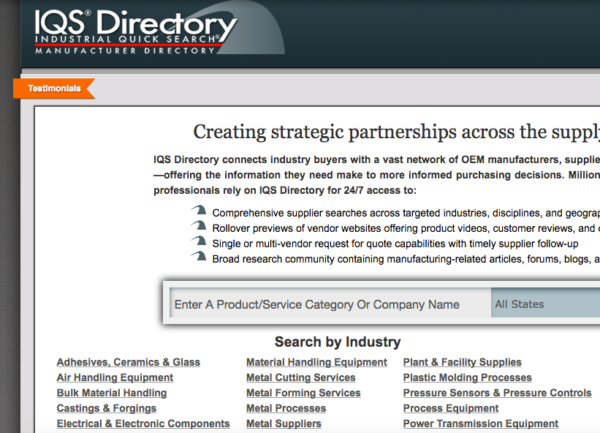
Evaluate them by looking at their authority score and see whether they feature competitors. Pay attention to the number of listings. For example, manufacturers may want to consider the IQS Directory from Industrial Quick Search.
IQS-Directory

The popular DMOZ directory recently closed, but you can use a static version to research potential backlinks. Get some great tips from How to Find Niche Directories to Boost Your SEO.

25. Include ego bait

You can mention one or more experts in your content and promote it socially. Will they link to your content just because you cited insights? Maybe. But if you don’t have a relationship, they may not link back even if they come across it or if you contact them directly.

26. Develop expert roundups

Your relationship odds could be enhanced if you ask experts to contribute to an article – like when they each provide some tools and best practices.

27. Publish a Q&A

You might arrange an interview with an industry expert and include his or her perspectives on a key topic. Maybe the expert will link back because you reached out, respected the ideas, and took the time to develop a piece.

28. Claim broken links

Hunt down broken links on websites and reach out to website owners and managers. Point out a link to a page that’s missing or a website that shut down. Offer your content as a substitute. Broken Link Building: How to Build Quality Backlinks by Fixing the Web and Broken Link Building Made Easy both offer numerous tips about this tactic.

29. Get more inbound links from existing sources

Who is linking to you that could be linking in more than one place? It never hurts to have multiple links from one source. You just don’t want to “game” search engines by getting a ton of links from one website in most situations. In other words, don’t seek a backlink from their footers.

Don’t “game” search engines by getting a ton of links from one website, says @mikeonelinecoach. #SEO Click To Tweet

30. Find product and brand mentions

Search for your products and brand, and inventory some websites that may be willing to link to your website. Many won’t as a matter of policy, but some will if you ask.

31. Be careful with self-created links

I’m not saying these types of links (also referred to as non-editorial links) are useless. Their value may be limited and they could be viewed as spammy (e.g., blog comments and forum profiles). You should be cautious and avoid going overboard.

32. Assess blog networks

If you create blog networks, you can control the content and build their authority over time. Other options may provide results sooner. If you tap into an existing blog network, you could be vulnerable if the network falls out of favor with search engines.

33. Use Help a Reporter Out (HARO)

With HARO, journalists share what stories they’re working on. Industry experts agree to be sources. It’s one way to earn backlinks when stories are published. Some participating media have more credibility than others.

34. Anchor text

When you request links or place links on directories, you should vary the anchor text. Don’t always use the same keywords. Link to a company, product name, or a variation of a keyword phrase you’ve used.

Conclusion

At the end of the day, good content will attract links. But the degree of your visibility will depend on your link-building efforts. What’s your experience? What approaches work best for your business?

Please note: All tools included in our blog posts are suggested by authors, not the CMI editorial team. No one post can provide all relevant tools in the space. Feel free to include additional tools in the comments (from your company or ones that you have used).

If you follow no other tip to improving your SEO, do this: Create great content. Want help in making it great? Subscribe to the daily CMI newsletter.

Cover image by Joseph Kalinowski/Content Marketing Institute

http://contentmarketinginstitute.com/2017/05/link-building-tips-seo/

On – 03 May, 2017 By Mike Murray


source https://andlocal.org/34-link-building-tips-tools-and-examples-for-seo-and-website-traffic/


How to Beat Google’s Mobile Page Speed Benchmarks – Search Engine Journal

How to Beat Google’s Mobile Page Speed Benchmarks
  • 5.5K
    READS

Google recently unveiled mobile page speed industry benchmarks and analyzed customer behavior to figure out how the two lined up.

Unfortunately, they didn’t.

Meaning:

  1. Most mobile websites are slooooooooooow.
  2. Consumers won’t wait longer than a few seconds.

That’s a problem. It means the vast majority of mobile websites are losing money, practically forcing customers to bounce and go somewhere else.

Here’s why that’s happening and what you should do about it.

Infographic: Google's new mobile page speed benchmarks and how they impact your business

Slow Page Load Speed Sabotages Your Revenue

The probability of someone bouncing from your site increases by 113 percent if it takes seven seconds to load, according to Google’s mobile page speed industry benchmarks, which were released in February.

Page load times and the probability of bounce

The problem?

The average time it takes to fully load a mobile landing page is 22 seconds, according to the same report.

That’s not good. In fact, it’s awful because that trickle down effect hits your bottom line, too. Slower sites cause more bounces which then lowers conversions:

“Similarly, as the number of elements—text, titles, images—on a page goes from 400 to 6,000, the probability of conversion drops 95 percent.”

This is nothing new. Slow page speeds have long been public enemy number one for years. Over a decade ago, then-Googler Marissa Mayer confirmed that Google themselves saw a 20 percent drop in traffic with just a 0.5-second delay.

Mobile-first indexation is coming, and speed is the mobile SEO Achilles Heel. E-commerce brands lose half of their traffic if pages take three seconds or longer, which has motivated some to get up-and-running in less than a second.

The primary reason for slow loads? In a word: bloat.

Too much. The way you feel after a Thanksgiving feast.

Google’s latest industry benchmark report analyzed more than 900,000 mobile ads from 126 countries (so sample size apparently ain’t a problem). Seventy percent of pages were over 1MB and “1.49MB takes 7 seconds to load using a fast 3G connection” (which brings things back to seven seconds and the 113 percent increase in likelihood to bounce).

The solution isn’t easy. You’re not gonna like it.

In fact, you might be tempted by a shortcut. It might seem easier initially to use a mobile-friendly alternative like AMP or Facebook Instant Articles.

But that would be a mistake.

Here’s why.

The Problem With AMP & Instant Articles

The Accelerated Mobile Pages Project (AMP) is a self-described “open-source initiative” with the lofty ideal to make the web faster.

Companies who use their technology can see mobile pages load “nearly instantaneously.” It does that by minimizing the amount of resources required through optimizing and compressing notoriously ginormous files like your images.

The ideals are lofty and ambitious. And the results are admittedly good.

Wired Magazine is just one of many huge publishers to reveal glowing highlights, with a 25 percent increase in click-through rates from search results. Gizmodo’s AMP traffic is 80 percent new visitors (presumably coming via search).

Why does AMP perform so well? You don’t need Benedict Cumberbatch for that one. It’s a Google-backed project. So AMP pages tend to get, how should we say, prime mobile SERP placement.

That’s a good thing. But there are a few drawbacks.

AMP is technically more difficult to implement, for starters. Jan Dawson argues that it’s effectively making it harder to publish on the web, writing:

“Technically, these formats use standards-based elements — for example, AMP is a combination of custom HTML, custom JavaScript and caching. But the point here is the outputs from traditional online publishing platforms aren’t compatible with any of these three formats. And in order to publish to these formats directly, you need to know a lot more code than I ever did back in the mid-1990s before the first round of WYSIWYG tools for the web emerged.”

Fortunately, things are slightly easier for WordPress sites. Here’s a three-step guide to setting up AMP on a WordPress site.

There are other problems, though. Losing your branding on AMP pages is one thing. Not good but not a deal killer necessarily. Losing your mobile traffic to Google is quite another, and it’s also the crux of the issue.

AMP content isn’t technically yours anymore. This can impact things like ad revenue, where results are mixed, as seen in the following tweets from Marie Haynes that caught my eye a few months back:

Marie Haynes tweets on AMP greatly reducing ad revenue

Facebook’s Instant Articles work largely the same way as AMP. Similar pros and cons, too.

Pages load on super speed on the plus side, reportedly up to 10x quicker. Early results from Facebook Partners also showed a 70 percent decrease in Instant Article abandonment (with a 20 percent CTR to boot).

Facebook Instant Articles

But the same proprietary infrastructure problems have caused many media conglomerates to hit the Pause button. According to analysis from NewsWhip and Digiday, several notable companies have pulled back on Facebook Instant Articles in the last year or so:

  • Boston Globe went from an incredible 100 percent to 0 percent
  • Business Insider posted 10 percent and now barely posts 2 percent
  • The New York Times has dropped to 10 percent
  • The Atlantic went from posting 85 percent to now only around 10 percent
  • Other early adopters like the BBC News, National Geographic, and The Wall Street Journal are now “barely using the platform”

Now, this isn’t a Chicken Little, “sky is falling” kinda thing. But it is a cause for concern.

Mobile-friendly platforms offer a tremendous shortcut in boosting mobile page speed. However, there are very serious drawbacks, too, like band-aids on broken arms.

A more prudent approach is to roll up your sleeves, take the long view, and fix your site from the ground-up.

Here’s how to do it.

How to Diagnose Slow Mobile Page Speed

Test My Site is the new version of Google’s old PageSpeed tool (complete with the latest and greatest, 2017 OC Housewives-style facelift).

So start there.

Point and click. This page should pop up next.

Google's Test My Site tool

Just plug in your URL and hit Test Now.

First, you’ll see the Mobile Friendliness score. Then in the middle is the mobile speed score in question.

Mobile speed score from Google's Test My Site tool

Ruh roh.

Let’s scroll down a bit to find out more details on that near-failing grade.

Mobile speed score details from Google's Test My Speed tool

Click on that little box to bring up a detailed assessment of where your site is doing well, along with those areas that aren’t doing so well.

Detailed mobile speed assessment from Google's Test My Site tool

Google mercifully goes into the details of which individual elements are causing you the biggest problems.

Here’s another view of this mobile page speed assessment on a mobile device. Because… why not? Everyone loves a good meta joke.

Mobile page speed assessment on a mobile device

OK. So the result ain’t pretty. That’s fine. Because now we know what to fix.

The next step is to dive into some of these new mobile page speed industry benchmarks and figure out how to increase them.

Buckle up. It’s about to get geeky.

How to Beat 3 Google Mobile Page Speed Benchmarks

1. Reduce Your Average Request Count

Google’s Best Practice: Fewer Than 50

Average request count

Requests are literal. Someone tries to visit your website and their browser requests information from your server. The data is compiled and sent back.

The more requests, the longer it takes. Reduce the number of requests that need to be sent back-and-forth and you can greatly reduce average page loading times across the board.

First, reduce the number of files that need to be sent. Yoast cites JavaScript, CSS, and images as your three primary problems.

Minifying JavaScript and CSS kills two birds with one stone. It reduces the number of files that need to be sent back-and-forth. It reduces the overall file size, too.

  • The GIDNetwork will help you run a compression audit.
  • Gzip will turn website files into zip files for easier transfers.
  • WP Super Minify is a WordPress plugin that will do a lot of heavy lifting for you.
  • Otherwise, Yahoo’s YUI Compressor can help tackle both CSS and JavaScript compression.

Contemporary web design is 90 percent image-driven. I just made up that stat. But you get the point. Today’s websites look like hollow shells if you remove the beautiful, retina-ready images that stretch across your screen.

The problem is that images (if not handled properly) will kill loading times. Once again, Yoast recommends using CSS sprites to combine multiple images into one. SpriteMe, for example, will take background images and combine them to decrease the total number of individual images.

Content Delivery Networks (CDNs) can also help you recoup bandwidth and cut down on website requests. They host large image files for you and distribute them across their own global network of servers. MaxCDN and CloudFlare are among the most popular.

Last but certainly not least, reduce redirects you use if possible. Redirects create additional requests. So proceed with caution.

2. Decrease Average Page Weight

Google’s Best Practice: Less Than 500KB

Average page weight in bytes

Seventy-eight percent of shoppers want more product images, according to the Omni Channel Retail report from BigCommerce.

The problem, as we just discussed, is that images can cripple page loads. They create more requests for servers. But they put your average page weight on a bulking plan that would make those meathead bodybuilders at your gym rage with envy.

Page size should be less than 500KB according to Google. And yet a single, unoptimized, high-res image already clocks in at around 1 or 2 MB.

You could start by simply cropping the sizes of your images so each is the exact width and height for the space it’s being used. Except, of course, nobody ever does that. Manually. Every single time they upload an image.

So instead, let’s start by compressing the image file itself with something like WP Smush.it. A non-WordPress tool like Compressor.io can also reduce an image by up to 73 percent.

Compressing images with compressor.io

Let’s run a quick scenario:

  1. Average e-commerce website conversions hover around 1-3 percent.
  2. That number can rise as high as 5 percent. (One example, Natomounts, sees 5 percent conversion rates with ~85 percent from mobile!)
  3. We just discovered that shoppers want more product images.
  4. And yet, according to Radware, 45 percent of the top 100 e-commerce sites don’t compress images!

3. Decrease Average Time to First Byte

Google’s Best Practice: Under 1.3 seconds

Average time to first byte

Time to first byte (TTFB) is a measurement that shows how long a browser has to wait before receiving its first byte of data from the server.

It’s essentially a three-step process:

  1. A visitor sends an HTTP request to your server.
  2. Your server has to figure out how to respond. This includes gathering the data required and organizing it to be sent back.
  3. Assuming all goes well, the request is sent back to the visitor.

TTFB is the time it takes for that complete cycle to finish.

We’ve already covered a few potential roadblocks during this journey. Too many requests, too many redirects, too many junky WordPress plugins, etc. all take its toll. A website visitor’s own network connection and speed also make an impact.

The aforementioned CDNs also help by reducing your server’s workload. They take over the burden of delivering large files so your own server can focus on delivering the rest of your site’s files and content. The best CDNs even go the extra mile. For example, reducing the physical location between the person requesting a file and the server sending it can have a huge impact.

Caching reduces TTFB by helping web browsers store your website data. Best of all, it only takes a simple plugin (like W3 Total Cache) or using a premium web host that will set up caching for you at the server-level (so no additional tools or plugins are needed).

A web host is like your server’s foundation. You can optimize images all you’d like. Use the best CDN on the market. But if you’re using slow shared hosting that splits resources, your site is going to be slow no matter how many tricks or tips or hacks you use.

Last but not least, a little sleight of hand.

Technically, removing JavaScript files from the head section and relocating them lower on an HTML document won’t reduce the overall number of requests or reduce file sizes. But it will help the important stuff — like the words on each page — to load a little quicker.

JavaScript is selfish. It wants to load all of its code before allowing anything else on the page to have a turn. Pushing it further down forces it to wait its turn until after a few images and basic content can pop up first.

Lazy loading is another common technique that won’t load (or display) an image until it’s within view. That way, page content can be loaded first. That’s helpful on long pages with tons of images (like this blog post). WPMU has a list of six lazy-loading WordPress plugins to try out.

Conclusion

Google has helpfully provided a few mobile page speed benchmarks to shoot for based on their in-depth analysis of what customers want. Unfortunately, the vast majority of websites are nowhere close to them.

Slow mobile page speed has been shown to cause users to bounce, which affects where you show up in search results, and ultimately what your website is able to generate in revenue.

Start by reducing the number of requests that happen each time someone visits your site. Then reduce file sizes along with average time to first byte.

It’ll take some heavy lifting. Definitely some dev help. But it’s your only shot at rescuing sub-par performance that’s sabotaging your bottom line.

Image Credits

Featured Image: Templune/Pixabay.com

In-Post Photo: Google.com

In-Post Photo: Facebook.com

Screenshots by Brad Smith. April 2017.

https://www.searchenginejournal.com/mobile-page-speed-benchmarks/194511/

On – 24 Apr, 2017 By Brad Smith


source https://andlocal.org/how-to-beat-googles-mobile-page-speed-benchmarks-search-engine-journal/

Friday, May 5, 2017

The Epic Rise of SEO: How, Why & Where to Invest – Search Engine Journal

The Epic Rise of SEO: How, Why & Where to Invest
  • 3.7K
    READS

Search engine optimization (SEO) has become a force to be reckoned with through mind, matter, and money. Here are my tools to conquer it.

SEO Is the Core of Brand Development, Awareness & Engagement

The clear majority of web traffic is facilitated by the heavy hitters of search engines: your Googles, Bings, and Yahoos. Thus, to not create your content with that in mind is to immediately omit your website from highly valuable traffic.

After all, 93 percent of online experiences begin with a search engine. Yes, 93 percent!

Take the term “keyword,” and understand its dual meaning. Sure, it is a term that is frequently searched, but also think of it as a key component to your brand development — how it engages your audience and how this term represents your brand.

SEO used to be solely tech-oriented, primarily driven by IT people. Now, it supports really all digital marketing and will continue to for the foreseeable future. Therefore, it should be regarded as a core component of any digital marketing program.

SEO Creates & Expands Your Market Position

Because of the immense and still-growing popularity of search engines, proper use not only engages your audience but will leave your company ascending the market rankings due to the exponential growth in visibility.

The same applies for a thought leader: a company or individual that shows initiative, and subsequently differentiation, in a specific field.

To drive SEO interest around your personal brand, you will need to start making a list of keyword phrases that support your competitive position, strengths, skills, and location. Your keywords, when defined and analyzed for search importance and competitiveness, can be used to boost your LinkedIn profile awareness and potential Google search results.

SEO in the U.S. vs. Global Outsourcing

It’s no secret the rationale behind most foreign outsourcing — cost. The budgetary and futuristic circumstances will differ brand to brand, but undoubtedly there are obstacles in global micromanagement.

One is simply the differences in actual language, and as such, rewriting is a must, no matter the country! There are abundant differences between American English and that of Britain, for example.

Also, be sure to implement local content. Making your content more relevant to your specific target audience increases local link building opportunities.

The Reality of Top Notch SEO

Like the old saying goes, you get out you what put in. You need to take the time and develop a sound strategy based upon that which is unique about your brand and content (an SEO audit is a great first step).

You’d do well to collaborate with a proven SEO consultant to expand your customer base. Have someone, if not a team, constantly monitoring the content and traffic (you can stay in-house with this so long as the vetting is adequate). Good SEO maintenance should never really stop, as search engines are constantly changing and modifying their algorithms.

The SEO Timeline & Forecast

SEO is more complex than ever. As noted here, many of the SEO tactics that were effective in 2004 can easily hurt your SEO today. And, sadly, plenty of companies are using outdated SEO tactics.

At least 50 percent of my current clients came to me after they were penalized by Google. Why? Because they were working with SEO practitioners who are still relying on the risky tactics of yesterday.

Just like a premium company attempts to prognosticate social, political, or financial change, SEO also must be treated and monitored from a forward-thinking perspective. You’d do right by your brand to have your SEO team keep their fingers on the pulse of that which is currently relevant, and that which will be.

SEO Costs & Resources

Revisiting the mantra of getting out what you put in, quality SEO ain’t cheap. Viable expenses include consultation, technical development, user experience professionals, outreach, and management (real online PR).

SMBs should be fully prepared to spend $2,000 to $5,000 monthly, while enterprise-level companies should view $5,000 as an absolute minimum. Digital Current has a fantastic breakdown of the hierarchy of SEO costs and services.

The Necessity of Paid Search

In my SEO experience, I encourage our clients that have either newer sites, penalized sites, or sites that are underperforming to leverage paid search marketing (which we manage). Paid search, or PPC, is typically the most effective in any campaign-driven program or product/model-based campaign.

Envision something specific (Apple MacBook Air, 17-inch white) or specific marketing efforts around a service which ties into a specific landing page that has been designed for conversion or action (one example I’d have in my PPC program would be a thought leadership development training for senior level executives).

Seasoned SEO veterans can utilize the deep data metrics provided in PPC reports to best understand user behavior and competitive market share as well as keyword activity so they can best shape your SEO strategies and programs. They learn from PPC and vice versa, in that if they are working with you, with your active SEO program you want the pros to design and for which to run paid media campaigns, they learn from your SEO reports and progress.

The Marriage of SEO Strategy & Social Media Marketing

There is a synergy between SEO and social media campaigning, and it’s growing by the day, which can result in a goldmine of generated leads. The nature of social media and social media marketing is viral, as content is engaged with and shared. So, by its nature, lead generation develops when a brand understands how to deliver ongoing, frequent content of interest to its influencers and potential buyers.

There is also an ongoing evolution, wherein people are simply using their social media channels to find whatever it is they are in search of, as opposed to Google. Using Twitter as an example of this, this article delves into how social media is becoming its own SEO.

Essential Takeaways

The value of SEO is no longer unclear or up for debate. With e-commerce showing absolutely no signs of slowing down, SEO is as important as it is complex, which is why proper resources and attention must be allocated toward it.

Know the power of SEO, know your personal strengths and weaknesses with it, know its costs, and then you may know it as your friend.

Image Credits

Featured Image: singkham/DepositPhotos

https://www.searchenginejournal.com/the-epic-rise-of-seo-how-why-and-where-to-make-an-investment/194215/

On – 25 Apr, 2017 By Jasmine Sandler


source https://andlocal.org/the-epic-rise-of-seo-how-why-where-to-invest-search-engine-journal/

9 Local SEO Experts Share One Secret to their Success – Search Engine Journal

9 Local SEO Experts Share One Secret to their Success
  • 4.5K
    READS

Local SEO is more important than ever. That’s why you’re always looking for the best techniques to dominate in the local search rankings and maximize your online visibility.

To provide insight into what’s working for local SEOs today, I reached out to my network of search industry experts and asked them a simple question: What is your number one secret for local SEO success? Here are their responses.


1. Build a Strong Citation Profile

Perhaps unsurprisingly, having a strong citation profile still comes up as one of the most talked about points on a local SEO’s checklist, as highlighted by Mark Scully of Learn Inbound:

“One of the most important aspects of Local SEO continues to be citations. You haven’t a hope of outperforming your local competition if you’re not investing a large proportion of your time into getting yourself listed on quality industry and city specific citation sources.

“So, how do you do it? Simple! Take time to search for the common keywords used for your industry and your location, identify the organic results returned for business listing sites, and then reach out to them to get your business listed.

Google Citation Search

“As with any outreach, it’s about the value-add for the site you’re speaking to, so you should flag what makes your business a standout resource for their audience.

“Attracting citations will be easier if you have a brand that people can warm to. As SEOs, we’re often guilty of just looking at metrics but forget about the most basic areas of branding. Be sure to spend time focusing on the copy contained on the core pages of your site. Make your business sound irresistible by highlighting the value-add of your services, your core values, and what separates you from everyone else as in the long-term, it will be much easier to attract citations.”


2. Keep Your Citations up to Date

As an extension to Mark’s advice, Craig Campbell recommends keeping citations up to date:

“It is also important to keep all the data on your listings consistent, using the same structure and information, and avoiding abbreviations as this will just lead to confusion with Google.

“Further to this, take the time to work on a strategy to earn links from other relevant local websites to build up local relevancy, something which will go a long way to helping you achieve some good local rankings while building up your citation and trust flow, two metrics which we all know Google gives a strong weighting to.”


3. Put a Plan in Place to Encourage Reviews

On a different note, Sam Charles of Float Digital highlights the importance of encouraging and responding to reviews:

“Reviews are a huge part of the internet now, and undoubtedly pivotal for businesses. Ninety-two percent of people regularly or occasionally read online reviews (BrightLocal, 2015), and 90 percent of people say online reviews influence their purchase decisions (Dimensional Research, 2013). If increasing conversions wasn’t enough, reviews work wonders for your local visibility, too.

“To increase your visibility in search engines locally, encourage users to leave reviews, and dedicate time to engaging with them. Remember to thank users for their feedback and motivate them to use your brand again in the future.

“Always be proactive in responding to user reviews, even if you’ve received damaging reviews. Addressing complaints is important for your brand image, and publicly demonstrates that you’ll go above and beyond to achieve customer satisfaction, too.

“Email your customers, set up review landing pages and put up signs in your store, but whatever you do, don’t be tempted to post false reviews. Posting false reviews isn’t only dishonest but it’s against Google’s quality guidelines, and doing so can have a negative impact on your local search visibility when you’re caught. It isn’t worth the risk, and you’ll almost definitely get found out.”


4. Make It Easy for Customers to Give Reviews

As an extension to Sam’s great advice, Marc Swann, Search Director at Glass Digital, advises local SEOs to:

“Make the process of securing reviews as simple as possible for your customers. Create a URL under your domain that redirects straight to the review form, and include the link in a short and friendly email request.

“You should also put resource into securing offsite reviews. As well as generating valuable citations or links, there’s potential for exposure to enhance your Google My Business listing via ‘Critic reviews’ or ‘On these lists’ sections. These can appear in your local SERP listing, giving you the competitive edge and generating click-throughs that boost your ranking.”

It’s all too easy, when running a local SEO campaign, to forget that back in 2014, Google claimed Pigeon created closer ties between the local algorithm and core algorithm(s). As such, many of the tactics used by SEOs shouldn’t be ignored, with those understanding this bigger picture being able to use it as a competitive advantage, earning links from top-tier publications, creating authority content, and leaving competitors falling behind on the SERPs.


5. Produce Epic Content

On the topic of authority content for local SEO, Freddie Chatt of EcomHacker offers his number one secret for success as:

“Don’t neglect the need to produce epic content to improve your local SEO. Even a single great piece of content can make a vast difference to your local rankings with the correct internal linking through to your main pages.

“Creating better (this could mean more in-depth, better designed or additional insights, as just a few examples) content, albeit less of it, will undoubtedly have a much better long term gain than a higher volume of poor quality pieces of content on a regular basis.”


6. Identify Easy Link Opportunities

Understanding the importance and the correct approach to link building in a local SEO campaign is something which was brilliantly highlighted by Greg Gifford in his recent BrightonSEO session. He made a number of top tips and suggestions on the topic of finding link opportunities, as well as why Possum made it essential to focus on ways to earn both industry-relevant links and local links.

According to Greg, local SEOs should always start their local link building campaigns by identifying easy link opportunities through existing relationships, local sponsorships, local volunteer opportunities, local offline groups and, of course, by taking the time to analyze the link profile of similar businesses located in other cities.

A site needs unique local links to win in the SERPs but must also have a strong foundation of those easy-to-acquire local links. Another commonly overlooked success factor: make sure not to point all links to your homepage.


7. Understand Your Audience

Simon Penson, founder of Zazzle Media, encourages local search marketers to understand their audiences and their journey:

“Local search plays an increasingly important role in the age of mobile. While a lot of SEOs focus their advice upon the claiming of ‘local pack’ real estate, my approach is to focus minds on the growing long-tail opportunity.

“My first tip for any marketer doing anything would be to get a clear and precise understanding of their audience and the ‘journey’ to products or services. The job of a marketer is to help them through that, as a subject expert, as much as possible.

“How does that translate into a local search strategy? Think about what informational content would help audiences become smarter consumers and ensure that is a core part of a content strategy. For instance, think about all the pain points and ‘I want to know’ moments an audience has and make sure all of these questions are answered for them, at a local level.”


8. Conduct a Gap Analysis

In many cases, local SEOs fail to understand the advanced approaches which can help take their own and their clients’ campaigns to the next level. This is something which Łukasz Żelezny, Head of Organic Acquisition at uSwitch, acknowledges in his tips:

“Aside from the classic and obviously important tactics we all know and implement in our day-by-day SEO approach, there are various things from a non-local SEO perspective that can be applied to local campaigns. My number one tactic which I’ve been using for years is gap analysis – you are looking for the gaps between you and your existing competitors.

“How it works? You simply need an account with SEMRush, Searchmetrics, SpyFu or Sistrix (all of them, ideally, but you can work with just one if software budget constraints exist).

  • Step 1: Export keyword lists that belongs to a selected LOCAL competitor.
  • Step 2: Duplicate the list if you used more than one software tool to create the export.
  • Step 3: Repeat the process to get export from another LOCAL competitor.
  • Step 4: Duplicate the list if you used more than one software tool to create the export.
  • Step 5: Export your own keywords.
  • Step 6: VLOOKUP to see where YOU ARE NOT ranking and your competitors simultaneously are.

“Now you know where your gaps are and you can start:

  • Optimizing existing content
  • Expanding content on existing URLs
  • Creating new content

“You can go deeper with the gap analysis, narrowing the list to (for example):

  • Only keywords ranking in top 10 positions
  • Keywords with specific ranges of search volume
  • A specific range of URLs

“Some of you may be familiar with the Domain vs. Domain tool from SEMrush. This is the perfect way to get started, especially if you don’t feel strong with Excel. After a while, however, you may find Excel way more efficient. Especially if you have access to more than one platform providing keyword data.”


9. Be Aware That Local Means Local

Rewind five or six years and, sadly, businesses could find ways to rank themselves on the local pack for areas outside their own geographical region. It wasn’t unusual to take on a client and find that they’d created listings in just about every city they could think of and find any old address in. This should never have worked. But it did.

This is something which SEO trainer, author, and speaker Mark Preston reminds marketers of:

“When it comes to local SEO, you need to be aware that local means local. If you want to get ranked in Manchester, you need to ensure your physical postal address is located in Manchester. Many people fail to see this and expect their site to rank within a 50 mile radius or even further afield without a physical presence in that area. It is never going to happen.”

On a slightly different note, albeit one which ties in perfectly with the above, Preston conducted a study back in 2016 which looks at the connection between local SEO and exact match domains, looking at rare anomalies to the usual case of difficulty ranking outside a core geographical area.

Summary

There’s no doubt that local SEO has its own tactics, which are essential to earn visibility on both the traditional SERPs and the local pack. Earning both local and industry relevant links are more important than ever before.

However, the lines are blurring with SEO as a whole. In fact, we’re starting to see some of the industry’s top minds offering advice which isn’t really too dissimilar to what would be applied across a site wanting to rank nationally or even internationally.

Image Credits

Featured Image: tashatuvango/DepositPhotos
In-post Photo: tashatuvango/DepositPhotos
Screenshot by Mark Scully. Taken April 2017.

https://www.searchenginejournal.com/local-seo-success-secrets/194229/

On – 20 Apr, 2017 By James Brockbank


source https://andlocal.org/9-local-seo-experts-share-one-secret-to-their-success-search-engine-journal/

Tuesday, May 2, 2017

Here’s How to Crush It With YouTube Influencers

It’s no secret most traditional online marketing tactics just don’t work anymore. Google’s Display Benchmarks Tool shows the average click-through rate of standard display ads clock in at 0.06 percent, and 47 percent of consumers employ ad blocking technology, as noted by the Reuters Institute.

These trends pose significant challenges to online marketers and underscore the need to employ alternative methods to drive conversions. When properly managed, influencer marketing becomes a powerhouse solution that offers high ROI, has an incredibly long shelf life and conveys massive credibility. In fact, 92 percent of consumers trust influencer endorsements more than typical adverts, according to influencer marketing platform MuseFind.

In the world of influencer marketing, YouTube is the zenith of social networks. That is not to say, however, that leveraging YouTube personalities is an automatic win. There is a minefield of brand and performance risks that must be navigated to ensure prolific, long-term success. YouTube influencers have reached their level of acclaim by promoting themselves in an authentic manner; people watch them because they say and do as they please.

Here is how to successfully maneuver in this delicate but powerful space.  

Lay the groundwork.

In order to reach your goals, pinpoint campaign objectives that serve your company’s broader intentions. Assign KPIs like cost per view, cost per conversion and other vital metrics.

When developing messaging, think in terms of providing a framework; this is not a scripted video. Leave it up to the YouTubers to build an authentic story around your framework and brand guidelines. If copy points are too rigid, there’s a good chance the video will come across as an advertisement, which can harm campaign performance significantly.

Craft an inclusive budget.

Your budget will largely dictate the size and number of influencers you recruit. Acquisition costs fluctuate significantly depending upon Youtuber’s reach, audience engagement, niche, sponsorship type, and many other factors. Generally speaking, integrated video sponsorships should range from $0.04 to $0.07 cost per view (CPV), whereas dedicated videos land at about $0.08 to $0.15 CPV.

Assemble the right team of social authorities.

Influencer identification and selection is without a doubt the most time-consuming step, but it is also the most imperative; this stage can make or break a campaign.

Start by outlining what entails a “brand match.” This should include everything from the influencer’s location to the size, age, sex, level of engagement and geographies of her audience. You also want to ensure her other content is appropriate for your brand and your audience.

Contact influencers that meet brand requirements with a clear and concise pitch letter. Outline sponsorship requirements, expectations, and benefits. Since established YouTubers have the luxury of handpicking brands they want to endorse, finding influencers who generally like your brand and respond with creative storyline suggestions or bonus promotions is, more times than not, a clear indicator of how successful the collaboration will be.

Find the folks who genuinely love your offerings and can’t wait to tell the world, and let them.

I’ll address additional success factors, including A/B testing and measuring results, cutting the fat, refining, repeating and scaling up, in my next article.

https://www.entrepreneur.com/article/293257

On – 01 May, 2017 By Mark Fidelman


source https://andlocal.org/heres-how-to-crush-it-with-youtube-influencers/

Pursue Your Facebook Ad Strategy Like the Entrepreneur You Are

The two most talked about and most admired entrepreneurial traits are perpetually challenging the status quo and the persistence through hard times to make ideas flourish.

It’s really not a different approach with running Facebook ads. Yet, so many entrepreneurs and small business owners try advertising on Facebook once or twice and deem it unsuitable channel for their promotions. Have you succeeded at everything, or even anything, the first time you tried? Chances are, there was more than one bump in a road; yet, here you are, still running your first or 15th business.

Same goes for Facebook ads. You can’t run it once and think you’re done trying. You also can’t outsource this important marketing channel to someone else without closely collaborating and supervising them. Marketing agencies, no matter how good they are, are still outsiders to your company. They don’t know your product and company history as well as you do, and they can’t care nearly as much about its success as you do.

This is not to say you can’t or absolutely shouldn’t trust third-party agencies. All that means is that you must keep your finger on the pulse of strategy and execution, and consistently push these outsiders to go to work for you every day.

Facebook ads are only as effective as you make them to be. As an entrepreneur, you are always looking for ways to improve your bottom line, decrease costs and increase profit margins. Take that same approach to Facebook advertising. If you ran a few ads which didn’t perform nearly as well as you had expected, keeping trying to crack the code. Define your audience better, craft a stronger creative, experiment with placements and schedules. Keep testing different variations of ads and audiences until those ads work for your business.

Even if your ads are performing decently it doesn’t mean you’ve reached the full potential this powerful marketing channel offers. If your ads perform OK, carry out mini A/B tests. Change little details one at a time to see what moves the needle. Seemingly unimportant details can make all the difference.

It might be a similar-but-slightly more approachable image of you or your product which looks more appealing. It may be as little as switching out two words in your ad copy that will blow your results through the roof. Seriously, it can happen if you wordsmith your ads to a point where it is so specific, your audience understands right away that this is the product for them and they want it now.

It may be the timing of your ads. It is possible that your audience is not very active during morning hours, but is very active during evening hours. Or, you are wasting your time on ads during workdays when your audience is really receptive to your offer on the weekends.

You didn’t walk away from your business after the first trial and error. You should have the same level of diligence in promoting your business. Yes, there are a ton of newer, cooler, shinier social channels out there but no one has the size or the power of Facebook. Until then, test, test, test and then test your ads some more to reach your audience. After all, this is also a learning curve and a great insight into what your audience truly wants.

https://www.entrepreneur.com/article/293504

On – 01 May, 2017 By Lesya Liu


source https://andlocal.org/pursue-your-facebook-ad-strategy-like-the-entrepreneur-you-are/

Monday, May 1, 2017

SEO: Creating the Perfect URL, or Not | Practical Ecommerce

URLs are what search engines use to aggregate all the data they collect regarding a page of content. For search engine optimization, what’s in a URL can be the difference between ranking number one and not ranking at all. Some of the things that matter and don’t, however, may surprise you.

Known formally as Uniform Resource Locators, URLs tell the requestors like servers and browsers where to find a page. They’re a human-readable format designed to mask the underlying number-based IP addresses. The diagram above illustrates the different pieces of a URL’s anatomy.

Friendly URLs contain words instead of long lists of numbers and letters. They are desirable because they are human readable, and for the small keyword relevance signal they send to search engines. The URLs that your platform creates automatically, by default, are probably not friendly. But most platforms these days have an option to make URLs friendly by substituting the names of paths and pages in the hierarchy of the site for the default numbers and letters.

Consider, for example, the following two URLs.

https://www.example.com/platform-id/products?catid=1262a89sd237g4df556ju&prodid=3489789

https://www.example.com/mens-shoes/loafers/brandx-jackson-penny-loafer-3489789

The second URL isn’t much shorter, but it is less intimidating and immediately recognizable as to what the shopper will get: a page related to men’s shoes.

Creating Optimal URLs

The best URLs for SEO have surprisingly few requirements.

  • Be as short as possible. Use as many characters as necessary to render a unique URL, but don’t insert extra words or folders into URLs purely for the benefit of SEO.
  • Use only lowercase alphanumeric characters. Uppercase characters are technically different characters than lowercase. Forcing all characters to the lowercase removes the potential that uppercase-URLs will crop up and generate duplicate content. Alphanumeric characters are important because any character that is not 123 or abc or one of the few allowed punctuation marks (such as ? and / ) will be encoded into confusing ASCII characters in your URL.

For example, the ® (registered trademark) symbol would be encoded to %AE in the URL, and a space in a URL would be encoded to %20. Even accented letters common in languages other than English will be encoded. For example, é will become %E9. For more information on URL encoding, see W3Schools.

  • Use hyphens as word separators. One of the few non-encoded marks, hyphens are the only traditionally recognized word separator. Underscores and spaces are not treated as separators and will be ignored, causing the words you intended to separate to be considered as a single long word by search engines.
  • Use keywords when possible.

Notice that “use keywords” is the last element in the SEO priority list for creating optimal URLs. Google engineer John Mueller has gone on record several times to say that “keywords in URLs are overrated for Google SEO.”

Yes, keywords are one more signal in the hundreds that contribute to better rankings. Yes, they’re important for human understanding and therefore user experience. But inserting keywords is not a good reason to rush out and optimize your URLs outside of a larger redesign or migration effort. Do it carefully and thoughtfully as part of a larger technical project that requires URL changes.

HTTPS Preference

Google prefers secure sites hosted on the HTTPS protocol, and has given them a ranking boost since 2014. The signal has strengthened since then, to the point that some studies show that over half of the search results on page one are now coming from sites on HTTPS.

The change from HTTP to HTTPS is technically a URL change, which does contain a certain amount of risk. Google in particular states that it is “pretty good” at handling the migration to the secure protocol. But 301 redirects should still be used to hasten the transition and performance needs to be monitored carefully to identify any potential issues.

Like optimizing URLs to contain keywords, migrating to HTTPS should be done cautiously. The IT team will have to take a lot of steps that SEOs don’t typically consider, such as moving all of the resources that make up the page — images, JavaScript files — to HTTPs as well as the primary site content.

That content may be hosted in different environments, all of which will require different security certificates. While load speed isn’t something that plagues most modern HTTPS implementations, it should be checked as well since it is also a ranking factor in search results. Canonicals, redirects, robots.txt files, XML sitemaps, webmaster tools’ verification, and other tasks will also need to be handled as part of the move.

For more on migrating to HTTPS, see “SEO: How to Migrate an Ecommerce Site to HTTPS.”

Hashtags in URLs

SEO professionals usually either proclaim JavaScript universally bad or universally crawlable based on whether or not they believe Google’s proclamation that “we are generally able to render and understand your web pages like modern browsers.”

However, there’s a big difference between everyday forms of JavaScript (some of which have been determined to be successfully crawlable and some not) and AJAX. AJAX stands for “Asynchronous JavaScript and XML.” AJAX is characterized by a URL that does not change as the content within the browser changes. AJAX also forces hashtags in a URL, typically.

Why include AJAX stuff in an article about URLs? Because hashtags in URLs are bad for SEO.

Optimally crawlable content is characterized by the mantra of one URL for one page of content. AJAX creates one URL for many pages of content, essentially robbing the search engines of a unique page label to which they can tie relevance and authority signals.

This article can’t go into the full story behind AJAX and hashtags in URLs, but if your developers want more information, tell them to look into pushState, which Bing and Google both support. Progressive enhancement and feature detection are always search engine favorites when it comes to site development, as well.

Note that the escaped fragments standard that Google developed in 2009, characterized by #! in URLs (“hash-bang” is the only time a hashtag is grudgingly accepted in a URL), is still supported, but it hasn’t been recommended by the engines since 2015.

When to Optimize URLs

Platform migrations and redesigns are the ideal times to optimize URLs. They’ll likely need to change as the site structure or technology changes anyway, so it’s a good time to insert requirements around URL content and syntax.

Importantly, only optimize your URLs if it’s required for technical reasons or as part of a larger platform migration or redesign effort. There’s too much risk and not enough reward in optimizing URLs — even to switch from parameter-based URLs to keyword-rich friendly URLs — to do it for the sake of SEO benefit.

Think of it this way: URLs are important to SEO because search engines attach their measurements of value to them. When a URL changes, the relevance and authority signals that search engines attach to a page are lost.

When you must change URLs, always 301 redirect the old URL to the new one. Redirects harvest the relevance and authority signals that the old page has earned over its lifetime and transfer the signals to the new page. The 301 redirect also prompts search engines to stop indexing the old URL and begin indexing the new one. For more information on 301 redirects and SEO, read my article “For Redesigns, Protect SEO with 301 Redirect Strategy.”

http://www.practicalecommerce.com/SEO-Creating-the-Perfect-URL-or-Not

On – 28 Apr, 2017 By Jill Kocher


source https://andlocal.org/seo-creating-the-perfect-url-or-not-practical-ecommerce/